
Before cleaning
Embedded text present
- PNG text fields
- 4
- Format and dimensions
- PNG / 640 x 400
- File size
- 6,771 bytes
Remove embedded AI fields, EXIF, GPS, XMP, color profiles, and Content Credentials. The verified copy downloads automatically.
Select a JPEG, PNG, or WebP. Cleaning begins immediately and the verified copy downloads automatically.
Processed privatelyJPEG, PNG, or WebPUp to 75 MB
Original file stays untouched
Image format stays the same
Clean copy is verified
The file changes. The encoded pixels stay intact. This public color chart demonstrates removal of four synthetic PNG text fields; it has no real camera, GPS, AI declaration, or signed Content Credentials.

When present in a supported file, embedded AI declarations and Content Credentials are removed too. Cleaning does not change how an image was created. Removing color profiles can still affect how colors are displayed.
Inspect the sample and download both filesThese separate AI-generated scenarios use a fictional creator and generic interface. They are not published posts, official platform interfaces, or a before/after upload test. Turning manual disclosure off does not prevent a platform from applying its own label.
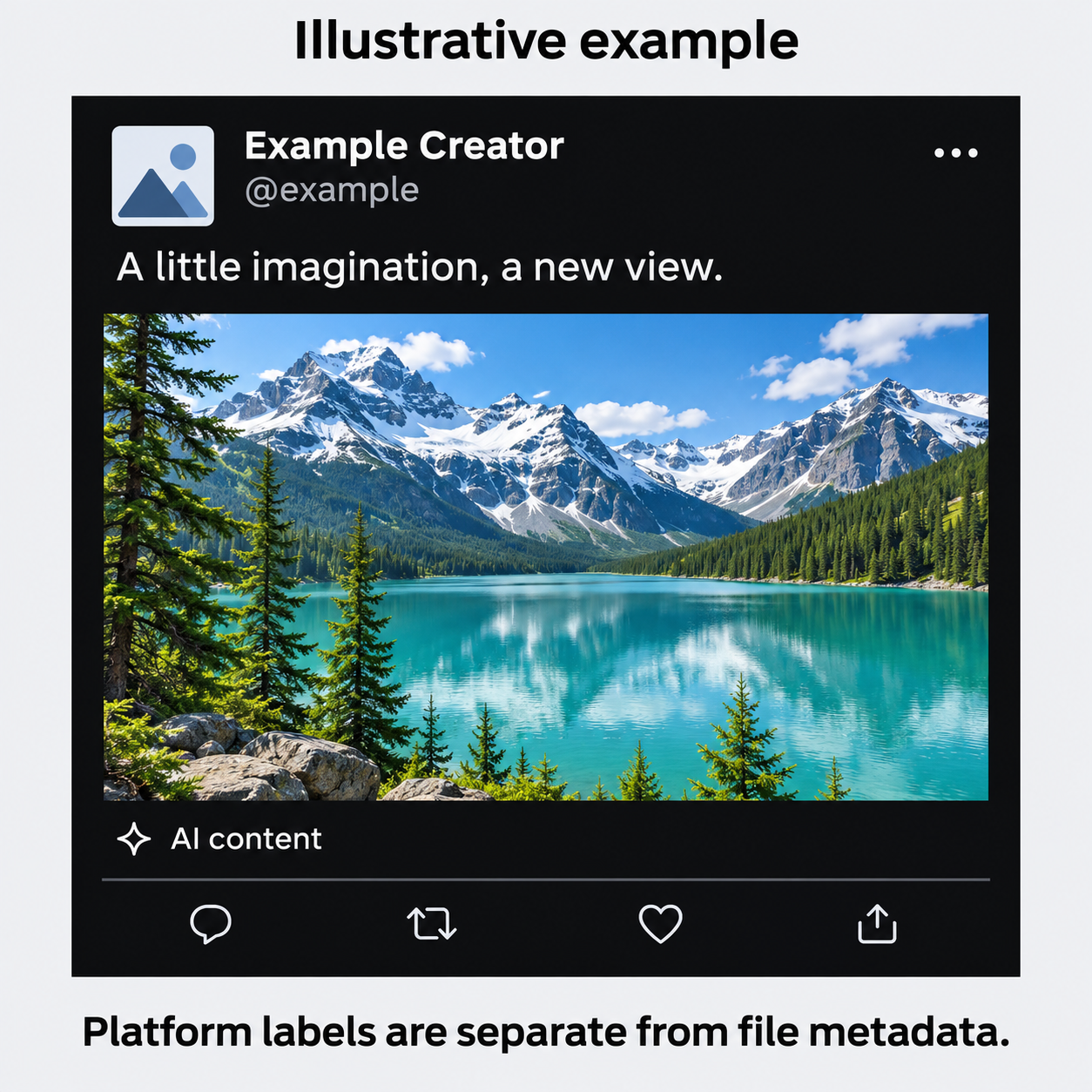
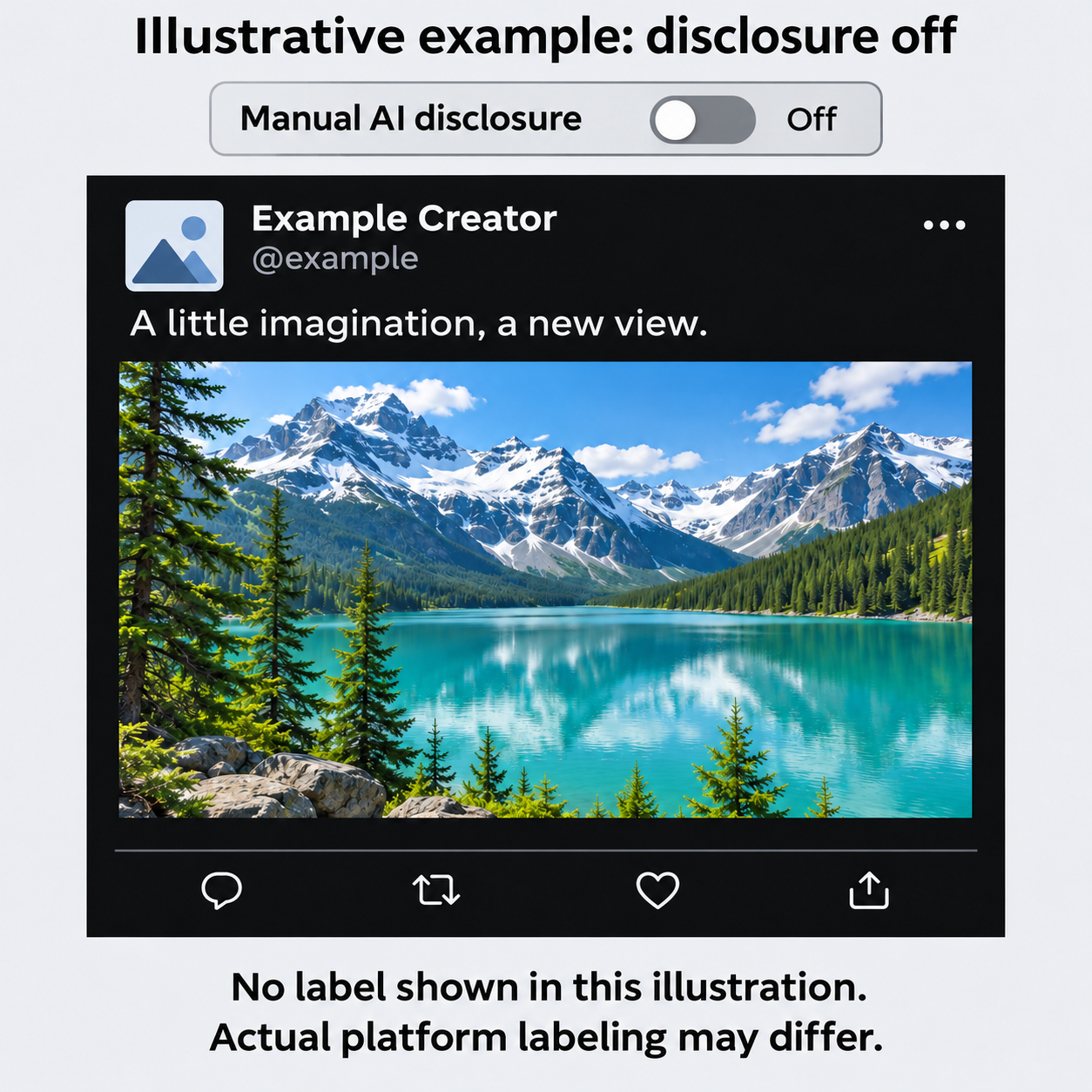
Your image stays in this browser. No image upload or account is required.
JPEG stays JPEG, PNG stays PNG, and WebP stays WebP. Pixels are not re-encoded.
The clean copy is inspected again before Photo Payload starts the download.
What happens to the file
Photo Payload parses the supported container, keeps the existing image data, and writes a new copy without ancillary metadata blocks. This is different from taking a screenshot or exporting through a canvas, both of which create a new pixel encoding.
Read the original container and count embedded metadata fields.
Create a same-format copy without the removable metadata blocks.
Inspect the output again before the browser starts the download.
The downloaded copy is checked for metadata that the cleaner understands. A successful result means those readable fields were removed while the file remained a valid image in its original format. It cannot guarantee that an unknown proprietary payload does not exist.
Cleaning supports JPEG, PNG, and WebP files up to 75 MB, 100 million pixels, and 32,768 pixels on either side. Other formats can still be inspected in the metadata viewer, but Photo Payload will not rewrite them as a clean same-format copy.
Common questions
Not necessarily. Photo Payload removes supported embedded metadata from the file, not labels attached to a social post. Platforms may use other signals or creator disclosures, so a cleaned image can still receive an AI label. Follow the platform's disclosure requirements.
It removes readable embedded metadata from supported JPEG, PNG, and WebP files, including EXIF, GPS, XMP, IPTC, comments, color profiles, AI declarations, and Content Credentials when those fields are present in the file structure.
The cleaner preserves the existing compressed image payload instead of decoding and re-encoding visible pixels. Dimensions and format stay the same, so cleaning does not introduce a new lossy-compression pass.
Metadata is often only a small part of an image. Removing it can produce a modest size difference even when many fields disappear. Use the image compressor when reducing file size is the primary goal.
Not from the cleaned copy. Keep the original file if you may need capture dates, location, copyright fields, color profiles, or signed provenance later.
No. Cleaning removes embedded evidence; it does not change how an image was created. A file without AI declarations may still be AI-generated, and a declaration alone is not visual forensic proof.
Inspect the original evidence first, or learn how metadata and Content Credentials differ before removing them.